Pottery Tools
Best Pottery Wheels for Beginners UK: Complete 2026 Buying Guide
Compare 4 pottery wheels from £188 to £1,729 with honest reviews
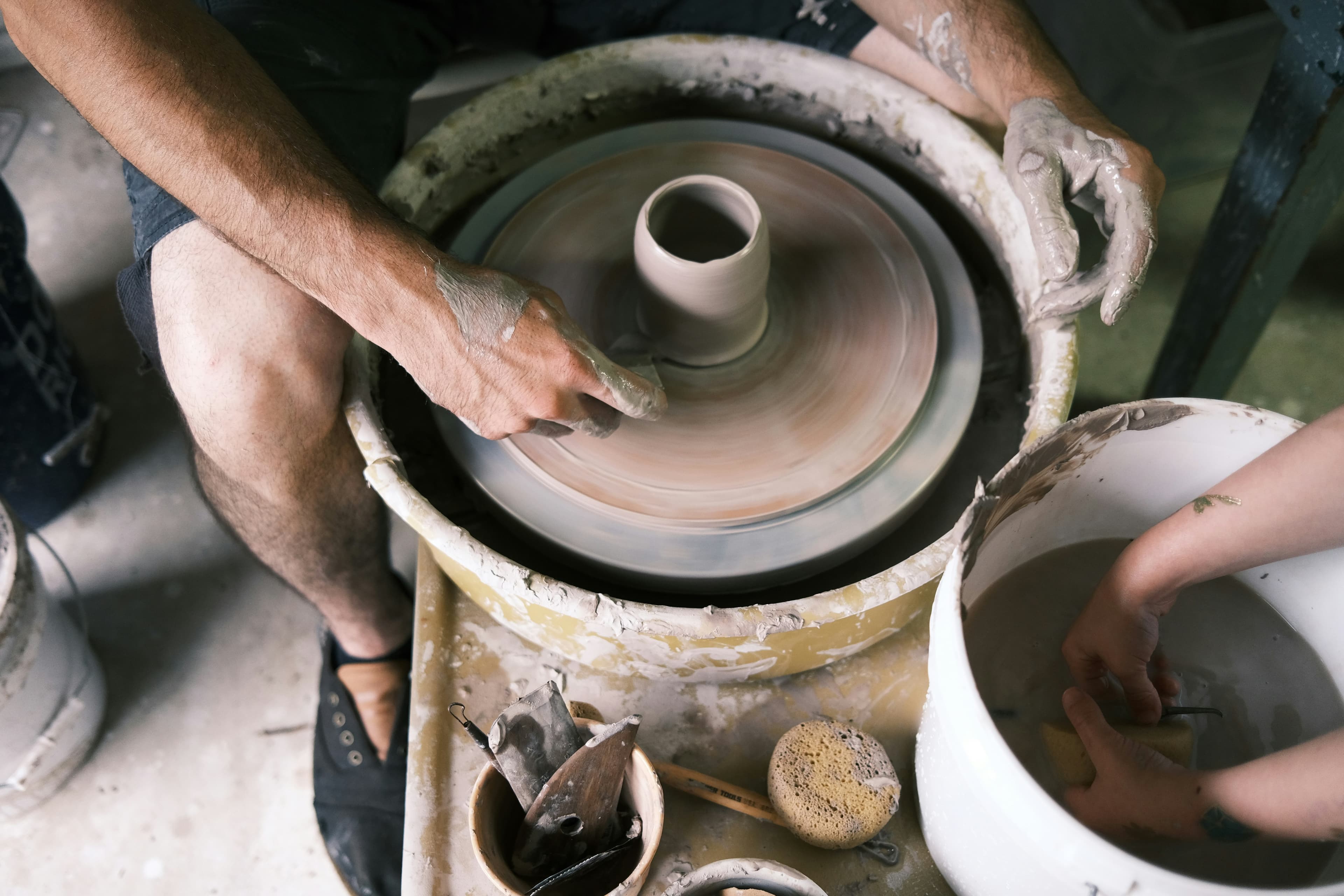
Looking for your first pottery wheel? The BriSunshine 350W Electric Pottery Wheel is our top budget pick for beginners at £188.99, offering adjustable speed (0-300 RPM), a 25cm turntable, and dual speed control via foot pedal or hand lever.
Pottery wheels for beginners range from £188 to £1,729 depending on motor power, build quality, and features. Entry-level wheels typically have 250-350W motors and can handle 3-11kg of clay, while professional models offer heavier construction and more torque.
Below, we've reviewed 4 wheels across different price points to help you choose the right one for your budget and skill level.
Quick Comparison Table
| Wheel Model | Price | Motor | Clay Capacity | Best For |
|---|---|---|---|---|
| BriSunshine 350W | £188.99 | 350W | 3kg | Best Budget Option |
| Airgoo AG-60 | £356.99 | 250W | 9kg | Best Mid-Range |
| Kilncraft Daisy Package | £1,199.00 | N/A | N/A | Best UK-Made Option |
| Gladstone G34 Bailey | £1,729.00 | N/A | N/A | Step-Up Professional |
What to Look for in a Beginner Pottery Wheel
Before diving into reviews, here are the key features that matter most when choosing your first pottery wheel:
Essential Features:
- Motor Power: 250-350W is sufficient for beginners. More powerful motors (350W+) handle larger projects better.
- Speed Range: Look for 0-300 RPM adjustability. Beginners need slower speeds (50-150 RPM) for centering.
- Wheel Head Size: 25-30cm diameter is ideal. Larger wheels give more working space but take up more room.
- Clay Capacity: 3-11kg is typical for home wheels. Start with smaller amounts (1-2kg) as a beginner.
- Speed Control: Foot pedal + manual lever offers the most control. Pedal-only can be tricky for beginners.
- Weight & Stability: Heavier wheels (12-20kg) vibrate less. Lighter wheels are more portable but may wobble.
- Splash Pan: Removable splash pans make cleanup much easier. Two-part designs can leak slightly.
Bonus features: LCD speed display, reversible rotation (for left-handed throwers), included bats, and detachable basins add convenience but aren't essential.
Best Pottery Wheels for Beginners Reviewed
BriSunshine 350W Electric Pottery Wheel
BEST BUDGET£188.99 £219.99
The BriSunshine 350W is our top pick for budget-conscious beginners. At just £188.99, it offers professional features like dual speed control, a 25cm aluminum turntable, and a powerful 350W motor—all at nearly half the price of competitor wheels.
Key Specifications:
- ✓ Motor: 350W brushless motor (strongest in budget category)
- ✓ Turntable: 25cm (9.8") rust-proof aluminum
- ✓ Speed: 0-300 RPM (adjustable)
- ✓ Clay Capacity: Up to 3kg
- ✓ Weight: 12kg (portable but stable)
- ✓ Controls: Foot pedal + manual lever
- ✓ Safety: Earth leakage protection
- ✓ Rotation: Left/right reversible
Why we like it: This wheel punches well above its price. The 350W motor provides smooth, consistent rotation even with 2-3kg of clay. The thickened steel frame reduces wobbling during high-speed work. The detachable water basin makes cleanup straightforward—no clay buildup in hard-to-reach corners.
Honest drawbacks: Some reviewers report quality control issues—one user noted "the wheel wobbles so much it's impossible to use." However, most reviews (54% give 5 stars) are positive. The compact size means it sits quite low, so you may need to build a platform or use a very low stool.
Best for: Beginners on a tight budget, small apartments with limited space, anyone wanting to test pottery before investing in a premium wheel.
Airgoo AG-60 Pottery Wheel (250W)
BEST MID-RANGE£356.99
The Airgoo AG-60 is a proven workhorse used in teaching studios across the UK. Despite having a "weaker" 250W motor compared to budget options, it handles up to 9kg of clay thanks to superior build quality and torque.
Key Specifications:
- ✓ Motor: 250W (⅓ HP) professional motor
- ✓ Turntable: 29cm with two-part splash pan
- ✓ Speed: 0-300 RPM with LCD display
- ✓ Clay Capacity: Up to 11.3kg (industry-leading for home wheels)
- ✓ Weight: 19.3kg (very stable)
- ✓ Controls: LCD screen + foot pedal + knob
- ✓ Includes: 29cm plastic bat + cup
- ✓ Rotation: Left/right reversible
Why we like it: A teaching studio owner reviewed this wheel after 4+ years of daily use: "They sit amongst Shimpo and Bailey wheels and hold their own. They are robust and great for teaching with the digital screen for speed control." The 19kg weight provides excellent stability, and spare parts are available from Airgoo EU.
Honest drawbacks: The two-part splash pan "doesn't quite fit snugly and tends to leak" if you use too much water. One reviewer suggests learning to use water efficiently rather than splashing liberally. The higher weight (19kg) makes it less portable.
Best for: Serious beginners planning to advance quickly, home studios with dedicated space, anyone wanting a wheel that will last for years of regular use.
Kilncraft Daisy Pottery Wheel Package
UK SUPPLIER£1,199.00
The Kilncraft Daisy represents a significant step up in quality. Sold by Kilncraft, a reputable UK pottery supplier, this wheel is designed specifically for beginners but built to professional standards.
What We Know:
- ✓ Brand: Kilncraft (established UK pottery supplier)
- ✓ Model: Daisy Pottery Wheel Package
- ✓ Price: £1,199.00
- ✓ Stock: 160 units available (popular model)
- ✓ Target User: Beginner-focused with professional build quality
- ✓ Support: UK-based customer service + spare parts availability
Why consider it: Kilncraft specializes in pottery equipment for UK schools, studios, and hobbyists. Their wheels typically feature heavy-duty construction, reliable motors, and excellent after-sales support. The "package" designation suggests it includes accessories like bats, tools, or a splash pan. Recent sales data shows strong customer interest, indicating satisfaction with the product.
The investment: At £1,199, this wheel costs 3-6x more than budget options. You're paying for UK manufacturing standards, better warranty coverage, and support from a specialist supplier rather than a general marketplace. This is a serious commitment to pottery as a long-term hobby.
Best for: Committed beginners who've taken several classes and know they want to pursue pottery seriously, UK buyers who value local support and warranty, home studios with £1,000+ budget.
Gladstone G34 Bailey Pottery Wheel
INTERMEDIATE+£1,729.00
The Gladstone G34 Bailey is an intermediate-to-advanced wheel that sits at the upper end of home studio equipment. While currently out of stock, it represents the quality level you might aspire to as your skills develop.
What We Know:
- ✓ Brand: Gladstone (premium pottery equipment manufacturer)
- ✓ Model: G34 Bailey
- ✓ Price: £1,729.00
- ✓ Availability: Currently out of stock (high demand)
- ✓ Target User: Intermediate to advanced potters
- ✓ Sold by: Kilncraft (authorized dealer)
Who is this for? The G34 Bailey is for serious hobbyists or semi-professional potters who've outgrown beginner wheels. At £1,729, it's priced similarly to entry-level professional studio wheels. Gladstone wheels are known for exceptional build quality, powerful motors, and decades-long lifespans.
Not a beginner wheel: If you're just starting out, this is overkill. The learning curve for pottery is steep—most beginners need 6-12 months of regular practice before they can fully utilize a wheel of this caliber. Start with a budget or mid-range option, then upgrade once you know your preferred throwing style and project types.
Best for: Intermediate throwers ready to upgrade, potters making large or heavy pieces regularly, anyone setting up a small production studio, experienced ceramicists wanting a "forever" wheel.
Note: Currently out of stock. Contact Kilncraft directly for restock notifications or to inquire about similar models in this price range.
Pottery Wheel Buyer's Guide
How Much Should You Spend?
£150-£250: Budget Entry
Perfect for testing if pottery is right for you. Expect some compromises in stability and longevity. Ideal for occasional use (1-2 times per week).
£300-£400: Sweet Spot
Best value for serious beginners. These wheels can handle regular use (3-5 times per week) and will last several years with proper care.
£1,000-£2,000: Professional Entry
UK-made quality with excellent warranties. These wheels are built to last 10-20+ years and can handle daily use in teaching studios or small production environments.
What Else Do You Need?
A pottery wheel is just the start. Budget for these essentials:
- Clay: £15-25 for 12.5kg bag (enough for 10-15 small pieces)
- Basic Tools: £20-40 for a beginner tool set (wire, sponges, ribs, trimming tools)
- Bats: £30-50 for a set of 3-4 removable throwing bats
- Workspace: Sturdy table or wheel stand (£50-100) plus storage for clay and tools
- Apron & Towels: £15-25 for pottery-specific gear
Total startup cost: £300-500 for a complete beginner setup (budget wheel + essentials) or £1,300-1,700 (professional wheel + essentials).
Common Beginner Mistakes to Avoid
- ✗Buying a wheel that's too small: Wheels under 20cm diameter are essentially toys. Stick with 25cm+ for real pottery.
- ✗Ignoring motor specs: "Mini" wheels with motors under 200W struggle with anything beyond tiny pinch pots. Get 250W minimum.
- ✗Skipping classes: A wheel doesn't come with throwing skills. Take at least 2-3 classes before buying your own wheel—many studios offer short courses specifically for this.
- ✗Not considering cleanup: Throwing is messy. Ensure your workspace has easy access to water and proper flooring (not carpet!).
New vs. Used Pottery Wheels
Should you buy used? It depends:
✓ Good reasons to buy used:
- • Premium brands (Shimpo, Brent, Skutt) hold value well
- • Save 30-50% on wheels that last decades
- • Test a wheel in person before buying
✗ Risks of buying used:
- • No warranty or return policy
- • Motor/bearing issues may not be obvious during testing
- • Replacement parts can be expensive or hard to find
Our take: If you find a used Shimpo, Brent, or Bailey wheel under £500 in good condition, it's worth considering. For budget Chinese wheels (like the ones reviewed above), buy new—they're affordable enough that warranty coverage matters more than savings.
Frequently Asked Questions
What's the best pottery wheel for complete beginners?
The BriSunshine 350W (£188.99) is our top budget pick for beginners. It has enough power and features to learn proper technique without breaking the bank. If you've already taken classes and know you're committed, the Airgoo AG-60 (£356.99) will last longer and handle more advanced projects.
Can I use a pottery wheel in an apartment?
Yes, but with considerations. Modern electric wheels are relatively quiet (under 60dB), similar to a conversation. The messier issue is clay cleanup—you'll need access to a utility sink or bathtub for washing hands and tools. Never rinse clay directly down drains without a clay trap, as it can cause blockages. Consider a compact wheel like the BriSunshine (12kg) if space is limited.
Do I need a kiln if I buy a pottery wheel?
Not immediately. You can use air-dry clay to practice throwing techniques without a kiln. However, to make functional ceramics (mugs, bowls, vases), you'll eventually need kiln access for firing. Many pottery studios offer kiln rental services (£5-15 per piece) or open studio memberships that include kiln use. A home kiln costs £400-1,500+.
How much clay can I throw as a beginner?
Most beginners start with 500g-1kg of clay per piece. Don't be fooled by wheel "capacity" specs—just because a wheel can handle 9kg doesn't mean you should start there. Large amounts of clay require significant strength and technique to center properly. After 3-6 months of practice, you might work up to 2-3kg pieces.
What's the difference between a £200 and £1,200 pottery wheel?
Build quality, longevity, and customer support. Budget wheels (£200-400) use lighter materials, basic motors, and may develop wobbles or bearing issues after 1-2 years of regular use. Premium wheels (£1,000+) are built for 10-20+ years of daily studio use, with serviceable parts, stronger motors, and UK-based support. For casual hobby use (1-3 times per week), a budget wheel is fine. For serious/daily use, invest more.
Can left-handed people use pottery wheels?
Yes! Most modern wheels (including all reviewed here) have reversible rotation. Right-handed throwers typically spin counterclockwise, while left-handed throwers prefer clockwise. Check the product specs for "reversible direction" or "left/right rotation" features.
How long does it take to learn pottery on a wheel?
Centering clay consistently takes most beginners 4-8 weeks of regular practice (2-3 sessions per week). Making a simple cylinder or bowl takes 3-6 months. Creating consistent, intentional shapes takes 6-12 months. Like any craft, pottery is a lifelong learning journey—even experienced potters continue refining their technique for years.
Final Verdict: Which Wheel Should You Buy?
Our Recommendations by Situation:
🎯 Best for Most Beginners
BriSunshine 350W (£188.99)
If you've taken 1-2 pottery classes and want to practice at home without a huge investment, this is the one. It has everything you need to learn proper technique.
View on Amazon →🏆 Best Long-Term Value
Airgoo AG-60 (£356.99)
If you're certain pottery will be a regular hobby and you want a wheel that lasts 5-10 years, spend the extra £170. Used in teaching studios, so you know it's built to last.
View on Amazon →🇬🇧 Best UK-Made Option
Kilncraft Daisy (£1,199)
For committed potters who value UK support and don't mind the investment. This is the wheel you'll still be using a decade from now.
View at Kilncraft →⏫ Best When You're Ready to Upgrade
Gladstone G34 Bailey (£1,729)
Not for beginners, but a fantastic choice once you've mastered centering and want to tackle larger, more ambitious projects. Currently out of stock—check back or ask Kilncraft about similar models.
Check Availability →Remember: the wheel is just a tool. Your pottery skills come from practice, patience, and willingness to fail repeatedly while you learn. A £200 wheel in the hands of an experienced potter produces better work than a £2,000 wheel in the hands of a beginner.
Start where your budget allows, practice consistently, and upgrade when your skills outgrow your equipment—not before.
Need more guidance? Check out our Home Pottery Kit Guide for alternatives to wheel throwing, or search our pottery class directory to find beginner wheel-throwing courses near you.
Pottery questions we’re always asked
- What's the best pottery wheel for complete beginners?
- The BriSunshine 350W (£188.99) is our top budget pick for beginners. It has enough power and features to learn proper technique without breaking the bank. If you've already taken classes and know you're committed, the Airgoo AG-60 (£356.99) will last longer and handle more advanced projects.
- Can I use a pottery wheel in an apartment?
- Yes, but with considerations. Modern electric wheels are relatively quiet (under 60dB), similar to a conversation. The messier issue is clay cleanup—you'll need access to a utility sink or bathtub for washing hands and tools. Never rinse clay directly down drains without a clay trap, as it can cause blockages. Consider a compact wheel like the BriSunshine (12kg) if space is limited.
- Do I need a kiln if I buy a pottery wheel?
- Not immediately. You can use air-dry clay to practice throwing techniques without a kiln. However, to make functional ceramics (mugs, bowls, vases), you'll eventually need kiln access for firing. Many pottery studios offer kiln rental services (£5-15 per piece) or open studio memberships that include kiln use. A home kiln costs £400-1,500+.
- How much clay can I throw as a beginner?
- Most beginners start with 500g-1kg of clay per piece. Don't be fooled by wheel 'capacity' specs—just because a wheel can handle 9kg doesn't mean you should start there. Large amounts of clay require significant strength and technique to center properly. After 3-6 months of practice, you might work up to 2-3kg pieces.
- What's the difference between a £200 and £1,200 pottery wheel?
- Build quality, longevity, and customer support. Budget wheels (£200-400) use lighter materials, basic motors, and may develop wobbles or bearing issues after 1-2 years of regular use. Premium wheels (£1,000+) are built for 10-20+ years of daily studio use, with serviceable parts, stronger motors, and UK-based support. For casual hobby use (1-3 times per week), a budget wheel is fine. For serious/daily use, invest more.
- Can left-handed people use pottery wheels?
- Yes! Most modern wheels (including all reviewed here) have reversible rotation. Right-handed throwers typically spin counterclockwise, while left-handed throwers prefer clockwise. Check the product specs for 'reversible direction' or 'left/right rotation' features.
- How long does it take to learn pottery on a wheel?
- Centering clay consistently takes most beginners 4-8 weeks of regular practice (2-3 sessions per week). Making a simple cylinder or bowl takes 3-6 months. Creating consistent, intentional shapes takes 6-12 months. Like any craft, pottery is a lifelong learning journey—even experienced potters continue refining their technique for years.