Online Learning
How to Learn Pottery at Home: A DIY Setup Guide
Set up a home pottery workspace and use local UK studios for firing and the trickier skills.
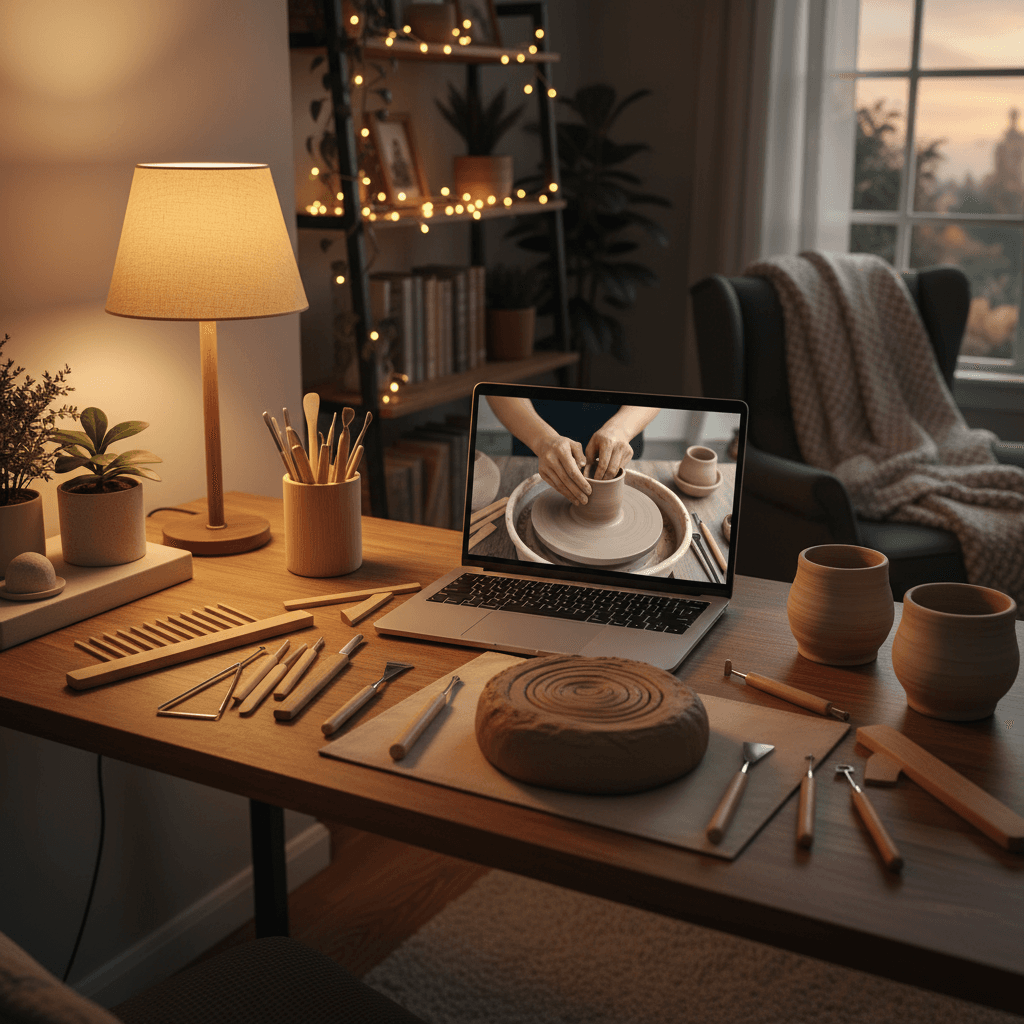
Maybe you’re short on time, or you’ve caught the clay bug and want extra practice between studio sessions. A simple home setup paired with the right learning resources can work wonders – provided you know how to keep things safe and sustainable.
If you'd rather skip the format comparison and jump straight to specific recommendations, we've reviewed the best online pottery courses for UK learners – six picks under £20 covering wheel throwing, hand building and mindful clay work.
Pick the right digital format
- Live Zoom classes for real-time feedback – look for UK tutors so time zones line up.
- Pre-recorded courses you can pause and replay while practising specific techniques.
- Membership communities (think Patreon or Teachable) that bundle video lessons with Q&A forums.
Setting up a home-friendly workspace
You don’t need a full studio to get going. Start with a sturdy table, waterproof mat, and a basic tool kit. Consider a tabletop wheel or focus on hand-building until you’re ready for machinery. When you’re done, dispose of clay slop responsibly (never down the sink).
Where to fire your work
Most at-home potters still rely on professional kilns. Use our directory filters for kiln access or firing services to find studios happy to finish your pieces – many offer drop-off slots once a week.
Blending home learning with studio support
Use online lessons to build muscle memory, then schedule occasional refresher classes at studios such as Clay Studio Nottingham or Globe Arts Studio to get feedback from in-person tutors. It’s the best of both worlds.
Pottery questions we’re always asked
- Do I need a kiln at home?
- No. Many at-home potters use studios for firing or work with air-dry clays. If you eventually invest in a kiln, follow the manufacturer’s safety guidance and consider ventilation requirements.
- What’s a good starter toolkit?
- Begin with a basic wooden knife, rib, sponge, needle tool and wire cutter. Most UK art shops sell beginner kits, or you can support local studios by buying theirs.
- Can I learn wheel throwing online?
- Yes, provided you have access to a wheel. Consider hiring a wheel from a local studio or joining their open studio programme to avoid large upfront costs.