Pricing
Pottery Class Prices UK: What You Actually Pay in 2025
Breaking down costs so you know if that £300 course is worth it or a rip-off
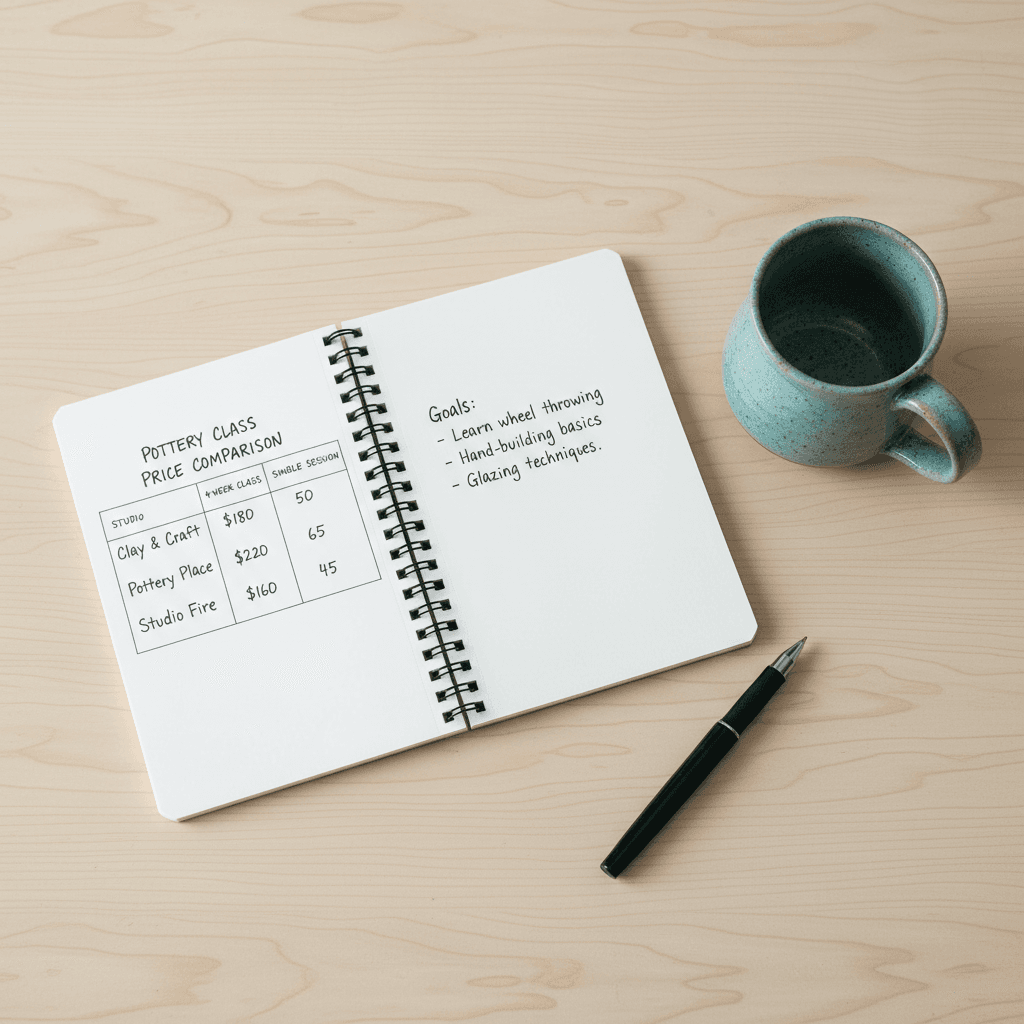
UK Pottery Class Prices at a Glance
- Taster sessions (1-2 hours): £35-£60. Single experience, usually includes one piece to fire and collect later. Good for testing if you like pottery before committing.
- 6-week beginner courses: £180-£320. Weekly 2-3 hour sessions teaching foundational techniques. Most popular option for serious beginners. Usually includes all materials and firing.
- Day workshops (4-8 hours): £85-£150. Intensive single-day experience. Great for specific techniques (wheel throwing, hand-building). Materials typically included.
- Private lessons: £60-£120/hour. One-to-one instruction tailored to your goals. Most expensive but fastest way to improve specific skills.
- Pay-per-class packages: £25-£45 per session. Buy 5-10 classes to use flexibly. Common at community studios. Materials sometimes charged separately.
- Open studio access: £10-£25/hour or £80-£200/month unlimited. For experienced potters who need workspace and equipment. Clay and firing charged separately.
Prices vary significantly between London (add 20-40%), major cities, and smaller towns. Studios in trendy areas charge premium rates.
What Should Be Included in the Price
Always included in proper courses:
- All clay needed for the sessions
- Use of all tools and equipment
- Basic instruction and demonstrations
- First firing (bisque fire) of your pieces
- Glaze firing of completed work
- Studio glazes and underglazes
Sometimes included, sometimes extra:
- Taking extra pieces home (many studios limit to 2-3 pieces per course)
- Special glazes or decorative materials
- Additional firings beyond the course structure
- Storage of work between sessions
- Raku or special firing techniques
Usually charged separately:
- Replacement clay if you use excessive amounts
- Private shelf space for ongoing work
- Studio access outside class hours
- Taking home unfired greenware
- Specialist workshops (raku, sculpture, large pieces)
Before booking, ask explicitly: "What's included in this price?" Studios should be transparent. Hidden fees for firing or materials are red flags.
London vs Regional Pricing
London prices: Expect to pay 20-50% more than regional averages. A 6-week beginner course that costs £200 in Sheffield or Newcastle might be £280-£350 in London. Taster sessions often £50-£70 instead of £35-£45.
Why London costs more: Higher rent, business rates, and operating costs. Studios compete for expensive warehouse space. Instructors charge more to cover London living costs. Demand exceeds supply in most boroughs.
Best value in London: Community centres and council-run facilities offer subsidised classes (£120-£180 for 6-week courses). East London studios (Hackney, Walthamstow) typically cheaper than West (Chelsea, Notting Hill). Evening classes often cheaper than daytime.
Regional pricing: Cities like Manchester, Birmingham, Bristol, Edinburgh: £180-£250 for 6-week courses. Smaller cities and towns: £150-£220 for equivalent courses. Northern cities generally 10-20% cheaper than Southern cities (excluding London).
Conclusion: Do not assume London quality justifies the premium. Many regional studios offer identical (or better) teaching for significantly less.
Hidden Costs to Watch For
Firing fees charged separately: Some studios advertise low course prices but charge £8-£15 per piece for firing. A 6-week course making 10 pieces suddenly costs £100+ more. Always ask: "Does the course price include firing?"
Clay charged by weight: Budget studios may charge £2-£5 per kg of clay used beyond a small allowance. Easy to accidentally use 10-15kg over a 6-week course. Adds £20-£75 to final cost.
Glazing fees: Rare but exists. Some studios charge £3-£8 per piece to apply glazes. Outrageous, but legal. Avoid these studios.
Mandatory membership fees: Some community studios require annual membership (£25-£60) before you can book any classes. Fair for unlimited access models, questionable for single courses.
Storage fees: Keeping work at the studio between sessions sometimes incurs weekly charges (£2-£5/week). Only acceptable if you are storing dozens of pieces long-term.
Collection fees: A few studios charge for storing finished work beyond 4 weeks. Annoying but understandable—they have limited shelf space.
How to avoid: Ask before booking: "What's the total cost if I make 8-10 pieces during this course?" Reputable studios will give you an honest all-in price.
How to Get the Best Value
Book courses, not single sessions: Per-session cost drops dramatically. A taster might be £45 for 2 hours. A 6-week course works out to £30-40 per 2.5-hour session with more intensive learning.
Community centres over trendy studios: Council-run and community centres often offer identical instruction for 30-40% less. Trade Instagram-worthy interiors for better value. Teaching quality is often equal or better.
Weekday classes over weekends: Weekend taster sessions and workshops command premium pricing (20-30% more). Weekday evening classes offer better value.
Early bird discounts: Many studios offer £20-£40 off courses booked 4-6 weeks in advance. Mailing list subscribers often get first access to discounts.
Beginner course bundles: Some studios offer "beginner to intermediate" packages (12-18 weeks) at discounted rates. Saves 15-25% vs booking courses separately if you are committed.
Off-peak terms: January-February and September courses sometimes discounted to fill classes. Summer courses (June-August) often premium priced.
Group bookings: Bringing 2-3 friends may unlock group discounts (10-15% off per person). Worth asking even if not advertised.
Student/concession discounts: Many studios offer 10-20% off for students, seniors, or unwaged. Always ask—not always advertised online.
When Higher Prices Are Actually Worth It
Small class sizes: Studios charging £280 vs £180 for a 6-week course may have 6 students instead of 12. Double the instructor attention justifies the premium. Ask about class sizes.
Specialist equipment: Courses teaching specific skills (throwing large forms, sculptural work, advanced glazing) using professional equipment and materials can warrant higher prices.
Experienced instructors: Teachers with 15+ years experience, exhibition records, or teaching qualifications bring significantly more value than recent ceramics graduates. Worth paying £40-£60 more for a course.
Longer sessions: Some studios offer 3-hour instead of 2-hour weekly sessions. The extra hour compounds over a 6-week course (6 extra hours = effectively 2-3 extra sessions).
Additional firings included: Studios including multiple bisque/glaze firing rounds let you experiment more freely. Creates better learning environment.
High-quality materials: Access to premium clays, commercial underglazes, and extensive glaze libraries adds genuine value for intermediate students.
When it is not worth it: Instagram-aesthetic studios with neon signs and cocktail bars charging £350 for beginner courses with inexperienced instructors and large class sizes. You are paying for ambiance, not teaching quality.
Pottery questions we’re always asked
- Are pottery classes VAT exempt?
- Most pottery classes are VAT exempt as educational courses. However, one-off workshops and taster sessions may include 20% VAT. Always check if the advertised price is inclusive or exclusive of VAT—this can add £30-£60 to course prices. Private lessons and studio access fees are typically VAT-able.
- Do pottery class prices include taking your pieces home?
- Usually yes, but with limits. Most 6-week courses include 2-4 finished pieces included in the price. Taster sessions typically include one piece. If you want to take home everything you make (8-12 pieces over a course), expect additional charges of £5-£15 per extra piece for firing. Always ask about limits before starting.
- Why do some London pottery classes cost £400-£500?
- Premium pricing reflects central London locations, small class sizes (4-6 people), experienced instructors, luxury studio environments, and sometimes includes extras like refreshments or extended studio access. These courses target corporate team-building or affluent hobbyists. Identical teaching quality is available for £180-£280 at community studios and East London spaces.
- Are online pottery courses cheaper than in-person?
- Online courses are usually £30-£80 for video content, but you cannot actually make pottery without clay, tools, a wheel/kiln, and instructor feedback. Online courses work only if you already have studio access elsewhere. For absolute beginners, online courses are false economy—you will need in-person instruction to develop throwing and hand-building skills.
- Can I negotiate pottery class prices?
- Small independent studios may offer flexibility for financial hardship, especially for longer courses. Asking about payment plans (splitting a £240 course into 3 installments) is reasonable. Group discounts are negotiable. However, established studios with waiting lists will not budge on pricing. Community centres have fixed council-set prices with no flexibility.
- Do expensive pottery classes guarantee better teaching?
- Not necessarily. Price correlates loosely with location and facilities, not teaching quality. A £180 course taught by a 20-year veteran potter at a community studio often provides superior instruction to a £320 course at a trendy space with recent graduates teaching. Check instructor experience, qualifications, and student reviews rather than assuming price equals quality.