Guides
Pottery vs Ceramics: What is the Actual Difference?
Spoiler: mostly semantics, but here is when the distinction actually matters
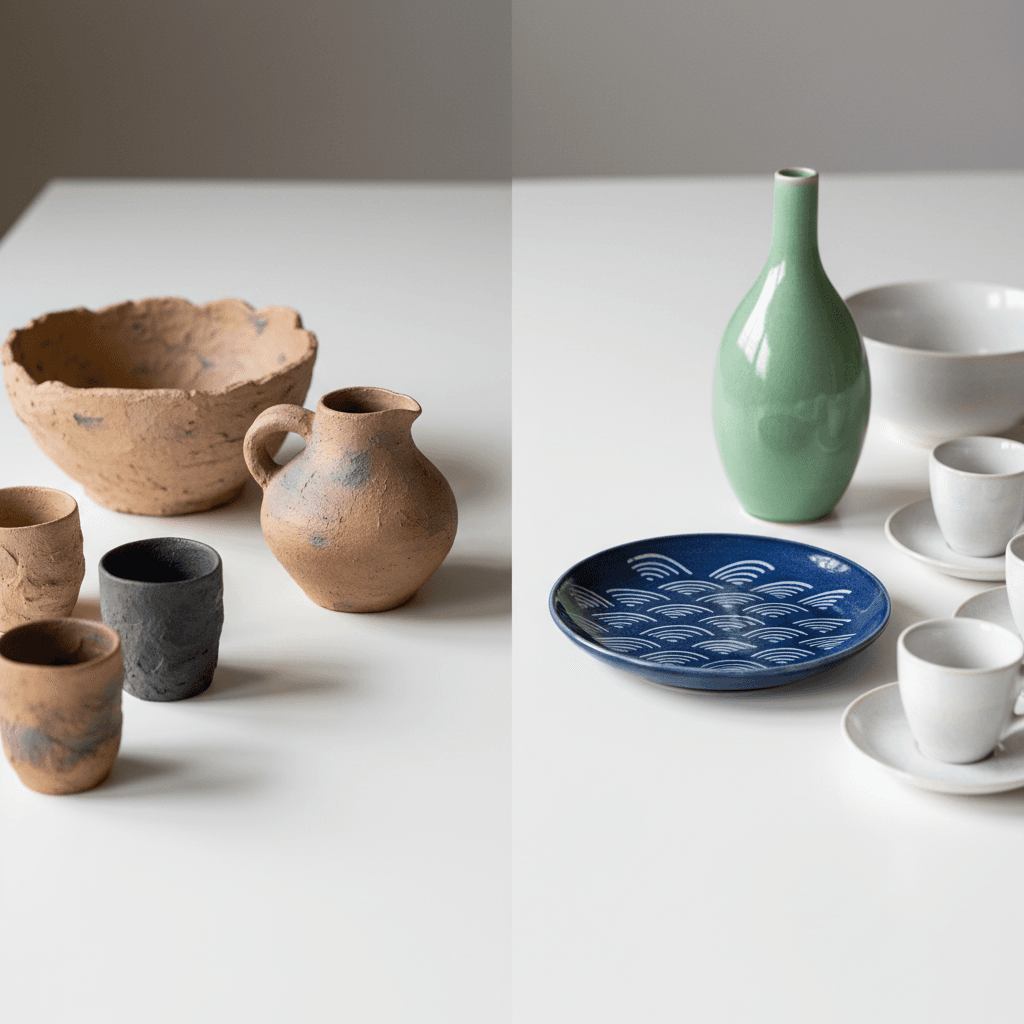
The Technical Definitions (Rarely Used This Strictly)
Ceramics (the broad term): Any object made from clay and fired at high temperature to harden it permanently. This includes pottery, tiles, bricks, porcelain figurines, sanitaryware (toilets, sinks), electrical insulators, and advanced technical ceramics used in aerospace.
Pottery (the subset): Functional or decorative vessels made from clay and fired. Bowls, mugs, vases, plates, teapots. The key defining feature is "vessel"—pottery holds things or serves a domestic purpose.
By this definition:
- A mug = pottery (and ceramics)
- A decorative clay sculpture = ceramics (not pottery)
- A clay tile = ceramics (not pottery)
- A handmade bowl = pottery (and ceramics)
In practice, nobody polices this distinction. People use "pottery" and "ceramics" interchangeably to describe handmade clay objects. Studios advertise "pottery classes" and "ceramics classes" to mean the same thing. Makers call themselves "potter" or "ceramicist" based on personal preference, not rigid definitions.
When the Distinction Actually Matters
Academic and institutional contexts: University degrees distinguish between "Ceramics" (broad fine art discipline including sculpture) and "Pottery" (functional ware). A BA in Ceramics might focus on conceptual sculpture. A pottery diploma teaches throwing, glazing, and functional design.
Gallery and exhibition settings: Galleries use "ceramics" for fine art clay work (sculptural, conceptual, decorative). "Pottery" implies functional domestic ware. An artist making abstract clay forms is a "ceramicist." Someone making tableware is a "potter."
Professional self-identification: Studio potters producing tableware for sale typically call themselves "potters." Artists making non-functional clay sculpture call themselves "ceramicists" or "ceramic artists." Those doing both often use "ceramicist" as it encompasses everything.
Course descriptions: "Pottery class" usually means you will throw on a wheel or hand-build functional objects (bowls, mugs). "Ceramics class" might include sculpture, tile-making, or decorative work alongside functional pottery. Check the course content—terminology varies by studio.
When it does not matter: Casual conversation. Telling friends you are taking a "pottery class" or "ceramics class" means the same thing. Both terms are understood and interchangeable in everyday UK English.
Common UK Usage Patterns
"Pottery" is more common in conversational UK English. People say "I am going to pottery class" more often than "ceramics class." Pottery feels more accessible and less formal.
Community centres and councils: Usually advertise "pottery classes." The term feels warmer and less intimidating to beginners.
Trendy urban studios: Often use "ceramics" in their branding. "Ceramics studio" sounds more contemporary and artistic than "pottery studio." Marketing choice, not a meaningful difference in what they teach.
Schools and formal education: Art departments teach "Ceramics" at GCSE and A-level. University courses are almost always "Ceramics" rather than "Pottery." Academic institutions prefer the broader term.
Workshops and craft fairs: You will see both. "Pottery workshop," "ceramic workshop," "pottery and ceramics market." Used interchangeably.
Google searches: "Pottery classes near me" gets 10x more searches than "ceramics classes near me" in the UK. People default to "pottery" when looking for beginner classes, even though studios use both terms.
Other Clay Terminology That Confuses Beginners
Porcelain: A type of ceramic (and pottery if it is a vessel). High-fired, white, translucent clay body. Technically a subset of ceramics, but people say "I work in porcelain" to distinguish it from stoneware or earthenware.
Earthenware: Low-fired pottery (1000-1150°C). Terracotta is the most common earthenware. Porous unless glazed. Used for plant pots, decorative ware, and Mediterranean tableware.
Stoneware: Mid-to-high-fired pottery (1200-1280°C). Most common clay for UK functional pottery. Durable, waterproof even without glaze. Most studio classes use stoneware.
Throwing: Making pottery on a wheel. "Wheel-throwing class" teaches you to center clay and pull up walls on a rotating wheel.
Hand-building: Making pottery without a wheel. Pinch pots, coil building, slab construction. Often considered more accessible for beginners.
Studio potter: Professional maker who produces functional pottery (usually tableware). Implies small-batch or one-off production, not mass manufacturing.
Ceramic artist: Broad term covering anyone working with clay in a fine art context. Includes sculptors, installation artists, and experimental makers.
Potter vs ceramicist: Both acceptable. "Potter" implies functional ware. "Ceramicist" includes sculptural and non-functional work. Many people use both depending on context.
What Should You Call Yourself as a Beginner?
"I am learning pottery" is the most natural phrasing. Clear, unpretentious, accurate.
"I am taking a ceramics class" is equally valid. Slightly more formal. Both are understood immediately.
"I am a potter" implies you have developed competence and make pottery regularly. Most people wait until 12-18 months of consistent practice before calling themselves a potter. Beginners saying "I am learning to be a potter" is fine.
"I am a ceramicist" sounds overly formal for hobbyists. Reserve this for when you are making sculpture or pursuing ceramics seriously (selling work, exhibiting, or studying at degree level).
"I do pottery" is casual and common. Works for all skill levels.
Nobody will correct you. The ceramics community is relaxed about terminology. Call it pottery or ceramics. Call yourself a beginner, hobbyist, potter, or ceramicist. As long as you are making things with clay, you are part of the community.
If in doubt, default to "pottery" for functional work and "ceramics" for everything else. This aligns with how most UK makers use the terms, but exceptions are common and nobody minds.
Why Does This Confusion Exist?
Historical evolution: "Pottery" is the older English term, in use for centuries. "Ceramics" became popular in the 20th century as clay work expanded beyond functional vessels into fine art and sculpture. Academic institutions adopted "ceramics" to reflect the broader discipline.
American vs British usage: Americans use "ceramics" more often than Brits. US universities, studios, and makers default to "ceramics." UK makers are more likely to use "pottery" for everyday conversation and "ceramics" in formal contexts. This creates inconsistency.
Marketing and branding: Studios choose "pottery" or "ceramics" based on their target audience. "Pottery classes" attracts older demographics and families. "Ceramics studio" attracts younger, design-conscious audiences. Both teach the same skills.
Overlap in meaning: The Venn diagram of pottery and ceramics is nearly a circle in practical usage. 95% of what beginners learn in a "pottery class" or "ceramics class" is identical—wheel throwing, hand-building, glazing, firing.
No governing body: Unlike law or medicine, there is no official body defining terms. Individual makers, studios, and institutions use whichever term feels right. This lack of standardization means both terms coexist without clear boundaries.
Conclusion: The confusion exists because the terms overlap so heavily that enforcing strict definitions is impractical. Context matters more than rigid rules.
Pottery questions we’re always asked
- Is pottery harder than ceramics or vice versa?
- Neither. Pottery and ceramics are not different skill sets—they are different terms for overlapping concepts. Functional pottery (bowls, mugs) and sculptural ceramics (abstract forms) require different skills, but both involve clay and firing. Wheel throwing is generally harder to learn than hand-building, but this is unrelated to the pottery vs ceramics terminology.
- Do pottery classes and ceramics classes teach different things?
- Usually no. In the UK, "pottery class" and "ceramics class" are used interchangeably for beginner courses teaching wheel throwing, hand-building, glazing, and firing. Some studios use "ceramics" to signal they also teach sculpture or decorative work, but this is not universal. Always check the course description rather than relying on the title.
- Should I search for pottery classes or ceramics classes?
- Search for both terms to get the most results. "Pottery classes near me" is more commonly searched and will return more results, but some studios only advertise "ceramics classes." Searching both ensures you find all local options. The classes themselves will be nearly identical regardless of terminology.
- Can I call myself a ceramicist if I only make functional pottery?
- Yes, but it is uncommon. Most makers of functional tableware call themselves "potters." "Ceramicist" is more often used by sculpture-focused makers or those working across functional and sculptural disciplines. However, there is no rule—call yourself whatever feels right. Nobody will challenge your terminology.
- Why do art schools teach ceramics instead of pottery?
- "Ceramics" is the broader academic term encompassing all clay work—functional pottery, sculpture, installation, experimental materials. Art schools use "ceramics" to reflect the wide range of approaches students might take. A ceramics degree includes pottery skills but is not limited to functional vessel-making. This allows students to explore sculpture and conceptual work.
- Is porcelain a type of pottery or ceramics?
- Both. Porcelain is a high-fired clay body, making it a type of ceramic material. When shaped into functional vessels (porcelain bowls, teapots), it is also pottery. When used for sculpture or decorative objects, it is ceramics but not pottery. The distinction depends on the object made, not the material itself.