Online Learning · Course Reviews
Best Online Pottery Courses UK (2026): 6 Picks Tested
Six online pottery courses worth your money in the UK — wheel throwing, hand building and mindful clay, all under £20.
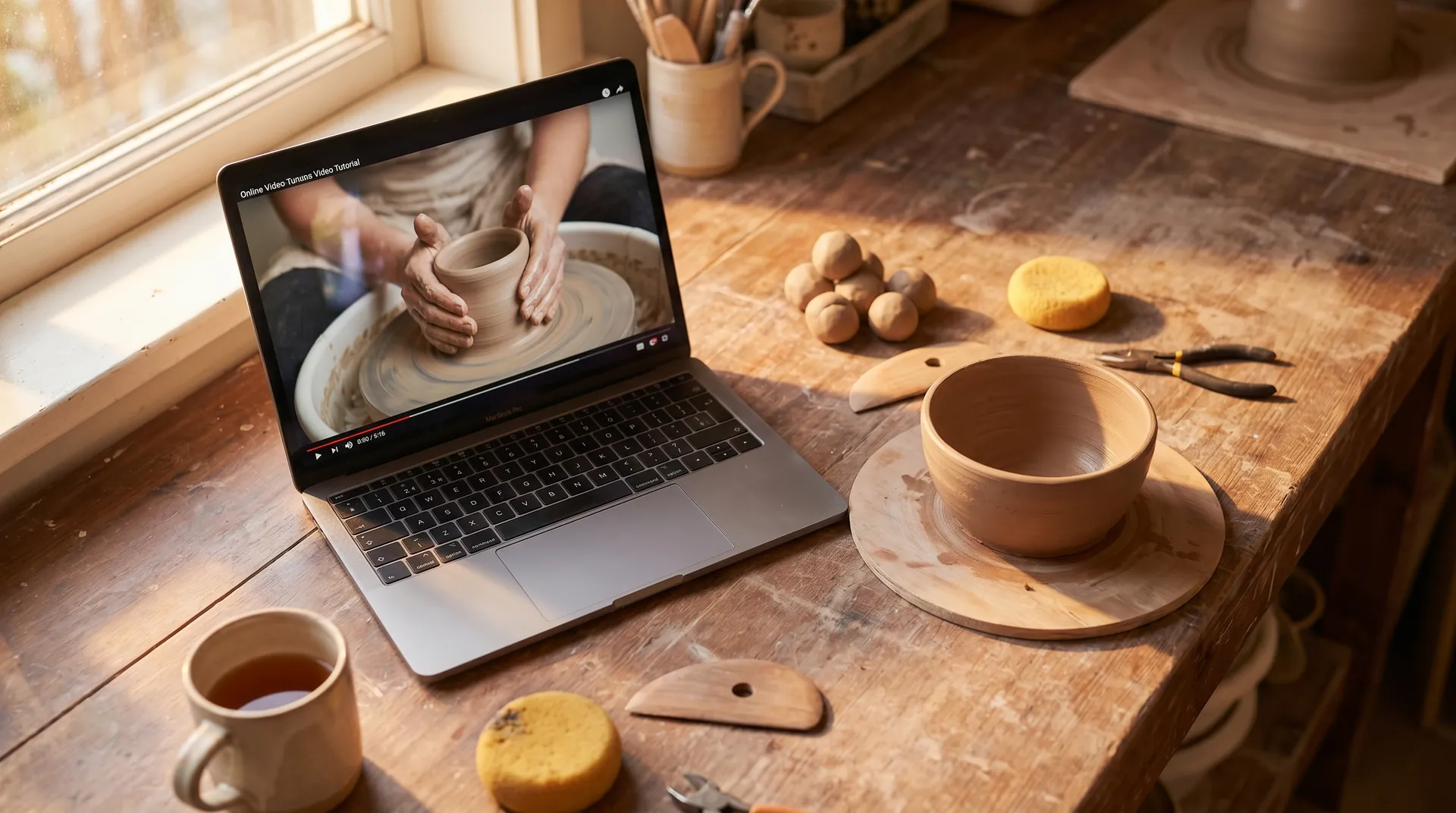
Want to learn pottery from home without committing to a weekly studio course? Online courses now cover everything from your first wobble on the wheel to advanced hand-building and surface decoration — and most of them cost less than a single in-person taster session.
We've picked six online pottery courses worth your money in the UK, all priced in GBP through Udemy. Each one is under £20, comes with lifetime access (so you can rewatch a centring lesson three months later when you actually have clay in your hands), and is taught by an instructor with real ceramic teaching experience. We've skipped the bloated "mega-courses" and the £60+ niche workshops in favour of focused, watchable courses you'll actually finish.
Quick Comparison Table
| # | Course | Length | Level | Price | Best For |
|---|---|---|---|---|---|
| 1 | Wheel-Thrown Pottery for Beginners | 3.5 hrs | Beginner | £19.99 | Best Overall |
| 2 | Centered: Pottery Wheel Course | 1.5 hrs | Beginner | £17.99 | Best Quick Start |
| 3 | Handbuilt Pottery Techniques | 1.5 hrs | All Levels | £14.99 | Best Hand Building |
| 4 | Clay as Therapy: Mindful Pottery | 1 hr | Beginner | £17.99 | Best Mindfulness |
| 5 | Pottery, Clay & Leaves Platter | 4 hrs | All Levels | £14.99 | Best Project |
| 6 | Wheel-Thrown Pottery III, Advanced | 5.5 hrs | Advanced | £19.99 | Best Advanced |
Prices shown in GBP from Udemy UK. Udemy runs frequent sales — courses often drop to £10–£14 during promotional periods.
Can You Actually Learn Pottery Online?
Honest answer: yes for hand building, partially for wheel throwing. Hand-building techniques (pinch pots, coil work, slab building, surface decoration) translate beautifully to video — you can pause, rewind, and copy what the instructor is doing with no in-person correction required.
Wheel throwing is trickier. Centring clay involves a feel in your hands that no video can teach you directly — you have to be doing it. The most effective approach is to take a one-day in-person taster at a UK studio first (typically £45–£90), then use online courses to drill specific techniques (pulling walls, trimming, attaching handles) between sessions. Online courses also work brilliantly if you already own a wheel and want to expand your repertoire without committing to weekly classes.
What to Look for in an Online Pottery Course
Instruction quality on Udemy varies wildly. Use this checklist to filter out the duds before you spend even £15.
Essential Course Features Checklist
Watch the sale cycle: Udemy runs frequent promotional periods where courses drop from £17.99–£19.99 down to £10–£14. If a course isn't on sale today, it almost certainly will be within a fortnight — bookmark and wait.
Wheel vs Hand Building: Which Course Type Fits You First?
The biggest decision before you buy is which technique to learn first — and the answer is almost always whichever one you can practise easily at home.
The 6 Best Online Pottery Courses Reviewed
Wheel-Thrown Pottery for Beginners — Trent Berning
£19.99
The standout beginner wheel-throwing course on Udemy. Trent Berning is a working ceramicist with a clear teaching style and proper hand-focused camera work. 279 ratings at 4.8★ — by far the most-reviewed pottery course on the platform.
Centered: A Beginner's Pottery Wheel Course — Kendyl Arden
£17.99
The fastest path through wheel-throwing fundamentals. Kendyl Arden covers everything from wedging clay to throwing a finished bowl in 1.5 hours — perfect if you've got a quiet weekend afternoon and want a no-faff overview.
Handbuilt Pottery Techniques and Projects — Mandar Marathe
£14.99
The cleanest entry point into hand-building for anyone without a pottery wheel. Mandar Marathe covers pinch pots, coil building, and slab construction across 25 short lectures — and every technique works on a kitchen table with under £30 of basic tools.
Clay as Therapy: Mindful Pottery Sessions — Bindu Jayaram
£17.99
If your reason for picking up pottery is stress relief rather than skill-building, this is the course to start with. Bindu Jayaram frames pottery as a meditative practice — slow, deliberate, sensory — and the 8 lectures are designed to be done alongside breathing and grounding exercises.
Pottery, Clay & Leaves — Sonya Wilkins (Leaf Platter)
£14.99
A focused project course that leaves you with a finished, photograph-worthy piece — a botanical leaf platter pressed from real leaves. Sonya Wilkins's hand-building approach is gentle, beginner-friendly, and the result looks far more impressive than the difficulty suggests.
Wheel-Thrown Pottery III: Advanced Techniques — Trent Berning
£19.99
Once you've outgrown beginner courses, Berning's Advanced volume tackles large-scale ceramic forms, teapots, ovals, and complex sectioned construction. 5.5 hours of genuinely intermediate-to-advanced wheel work — rare on Udemy, which is dominated by beginner content.
How Online Courses Compare to In-Person UK Classes
Both have their place — but they're not substitutes for each other, and most committed UK potters end up doing some of both.
| Factor | Online courses | In-person UK class |
|---|---|---|
| Cost | £15–£20 lifetime | £45–£90 per session |
| Instructor feedback | None — pre-recorded | Real-time correction |
| Wheel access | You need your own (£189+) | Included in class fee |
| Kiln & firing | You need a studio firing service | Included in class fee |
| Rewatch capability | Lifetime access, pause and rewind | One-shot only |
| Social aspect | Solo learning | Group setting, meet other makers |
| Best for | Practising between sessions, theory | First-time pottery experience |
The Kit You Need Before Starting an Online Course
The £15–£20 you spend on the course is the cheap part — the kit is where the actual budget goes. Here's the minimum to get useful results.
For a complete buyer's guide, see our complete home pottery starter kit guide and our best beginner pottery wheels (UK) roundup.
How Much Should You Spend on an Online Pottery Course?
Final Verdict: Which Course Should You Buy?
If you have wheel access (your own or a studio's), this is the course. 4.8★ across 279 ratings — the most trusted pottery course on Udemy.
View on Udemy →Works on a kitchen table with £30 of basic tools. The right starting point if you don't own a wheel yet.
View on Udemy →1.5 hours covers wheel fundamentals end-to-end. Pair with the Berning course as a second-instructor reinforcement.
View on Udemy →Mindfulness-led pottery for adult learners using clay as wellbeing rather than skill-building.
View on Udemy →Finish with a real, photographable leaf platter. Great gift-making course or weekend project.
View on Udemy →Once you've mastered the basics, advanced forms — teapots, large vessels, sectioned construction. 4.9★.
View on Udemy →Online pottery course questions
- Can I really learn pottery online without a wheel?
- Yes — hand-building courses teach pinch pots, coil work, slab building and surface decoration without needing a wheel. You only need a flat surface, some clay, basic tools (around £20) and access to a kiln for firing. If you specifically want wheel throwing, you'll need either a home pottery wheel (the cheapest reliable ones start around £189) or you can use an online course to learn the theory and pair it with a few in-person sessions at a local UK studio to practise the physical skill.
- What's the best way to learn pottery as a complete beginner?
- An in-person beginner course at a local pottery studio is the fastest way to learn — you get hands-on correction from a tutor in real time, access to professional wheels and kilns, and immediate feedback on what your hands are doing wrong. Online courses are the second-best option and are excellent for two things: (1) practising between in-person sessions, and (2) getting started cheaply if you can't access a UK studio. A common pattern: take a one-day in-person taster (£60–£100), then top up with a £15–£20 online course covering the same techniques to embed them.
- What is the 3-pull rule in pottery and do online courses teach it?
- The 3-pull rule is a wheel-throwing principle: aim to bring your clay walls up to their final height in three controlled pulls, rather than many small ones. Each pull thins the wall and stresses the clay, so fewer pulls = stronger, more even pots and less risk of collapse. Most good wheel-throwing courses on Udemy and YouTube cover this directly — Trent Berning's 'Wheel-Thrown Pottery for Beginners' walks through it explicitly, and it's a useful concept to look for when comparing courses.
- Are Udemy pottery courses worth it in the UK?
- Yes, for two specific reasons. First, the pricing is genuinely low — most pottery courses sit in the £15–£20 bracket in GBP and Udemy frequently runs sales that drop them further. Second, you get lifetime access, so you can rewatch a centring lesson three months later when you actually have clay in your hands. The catch: instruction quality varies widely between instructors. Stick to courses with 100+ ratings, a rating of 4.5★ or higher, and a clearly experienced ceramicist as the instructor (look for their teaching credentials and example work in the preview video).
- Do I need a kiln to take an online pottery course?
- No — you can complete the entire learning portion of any online pottery course without a kiln. You'll only need a kiln to finish (bisque and glaze) your pieces. Most UK at-home potters never buy a kiln; instead, they use a local studio's firing service, which typically costs £3–£10 per piece. Our directory lets you filter for studios offering kiln access and firing services. Air-dry clay is the alternative if you want finished pieces without any firing at all, though they won't be food-safe or fully waterproof.
- Online course or in-person UK pottery class — which should I do first?
- If your budget allows, do an in-person taster session first (typically £45–£90 in the UK). Two hours with a tutor will teach you more about centring and clay feel than any video can — pottery is fundamentally about your hands learning the material. Then use online courses to practise and expand between in-person sessions. If you genuinely can't access an in-person class (rural location, accessibility, or budget), online courses combined with a beginner pottery wheel or hand-building kit at home are a perfectly valid starting point — just expect a slightly longer learning curve.